
An Abundance

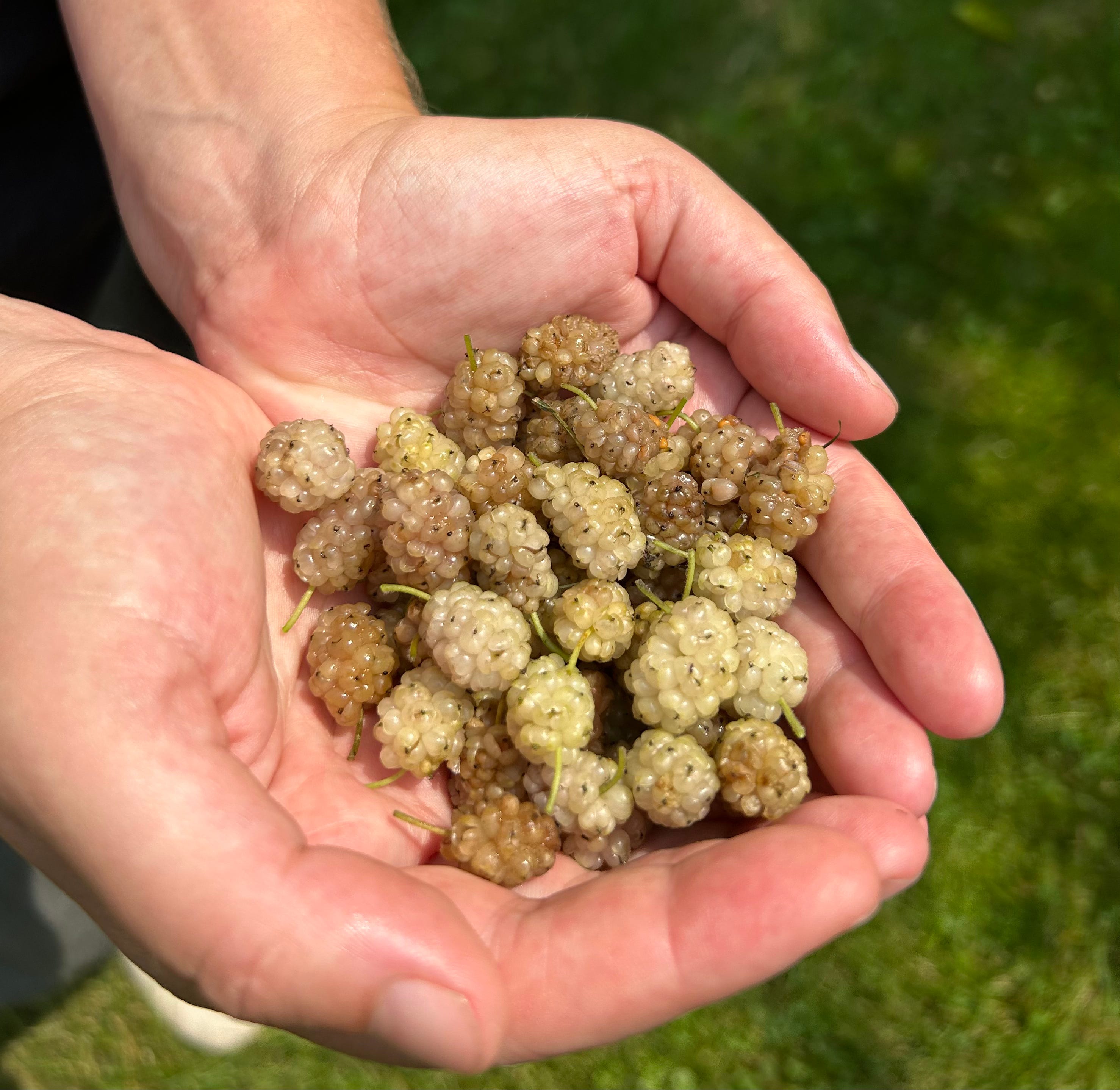
Right now, the smell of slowly fermenting, slightly alcoholic fruit drifts in from the yard to my dining room. I love this smell; it’s the smell of midsummer, at least for me, in my little patch. The smell, it comes from the neighbor’s mulberry tree, or rather, the smell of the now rotting berries fertilizing the ground, the berries the squirrels and cedar waxwings and possums and raccoons didn’t catch in time. By now, the flies and other insects are taking advantage of the bounty. Walking barefoot in that part of the yard leaves feet sticky with memories of the squish from the mulberries’ give. The tree becomes a tiny ecosystem of its own, first slowly, then all at once. The fracas begins in late spring as the yet-to-ripen fruit appears and the waxwings begin their work. I know the berries have arrived because of the birds and their tinny tsssss, tsssss, tsssss sounds that fill the air around the tree. They usually stay in another neighbor’s yard, the neighbor who often makes me think thank god for her wildness, a thicket of trees and vegetation that fills the lot behind her house. I know when they’re there, the high-pitched noises carry over, even from a yard away, and I feel comforted.
Alice Waters has said that white mulberries are the most insipid of the species’ varieties. But, I live with this white mulberry tree, and, four summers in, I’ve loved it as much as any other vegetation around my house. When I’m in the yard, I pick a handful of berries and enjoy their almost-sweetness as I take a walk to visit the other plants. (What might be insipid to some is subtle to me.) Reading in the morning in the mini-prairie I’ve created around my patio, I hear a gentle donk donk, as a couple more berries fall from the tree. The sounds of grackles sparring over a particularly good branch of the fruit mark time spent cutting flowers for the house.
The bounty of the tree arrives around the same time as the birds and other critters start to bring their spring babies out into the world. One summer, I watched a gang of six baby raccoons clean up on the berries with their mother after dusk. The first scuttled across a nearby lawn poking its head out from behind the large maple tree as it reached its trunk. The rest followed, each piling its head atop the last’s. The effect was cartoonish and I would have laughed if I hadn’t feared scaring them all away. They ran to the mulberries in that weird fast-slow way raccoons move. Then they feasted. Their concentration was so deep that I was able to take a video without disturbing them. The snapping of their teeth around the softness of the berries became its own soundtrack to the evening. That same summer bluejays and downy woodpeckers hung around the tree with their young, miniature replicas hopping behind originals through the branches and yard. The next summer a young buck showed up every afternoon or evening for weeks. He became so used to my watching him that he’d give a subtle grunt when I closed the screen door behind me, letting me know he knew I was there, but that he really couldn’t be bothered.
I’d waited years to see the cedar waxwings. They’re the draw for me. Their feathers look like the sunsets that burn above my house: deep-yet-muted shades of orange-y rose, a little globe of golden sun setting across their plump bellies, the grays and blues and slates that begin to creep in when the big show at the day’s end is complete streaking their wings. Why it took me so long to finally look up and see these birds, I have no idea, but this year I laid contentedly across the sofa on my patio, binoculars glued to my eyes, moving back and forth across the tree’s branches until I caught first one, then two, then tens of waxwings. My obsession grew. I spent my time by the dining room window, looking up into the mulberry tree and watching the birds jump from branch to branch. Sometimes feeding each other—not parents feeding young, but adults bringing berries back and forth, taking turns, a practice I also observed in cardinals earlier this spring—sometimes taking in berries for themselves. Their little black masks making them seem all the more animated.
A string of damaging storms came through this weekend and knocked most of the remaining berries off the tree, but the waxwings stopped spending their days in the tree before that. Now, small flocks swing by every so often to gulp up what’s left of this year’s offering. This morning, as I sat, surrounded by so many blossoms—the wild bergamot, yarrow, hyssop, blue vervain, scarlet beebalm, and a few sunflowers sowed by overflow from the bird feeder—that familiar tsssss, tsssss, tsssss filled the air around me and I looked up, catching only the dark silhouettes of the birds as they surveyed the upper branches of the tree. They didn’t stay long, only a minute or two, before giving up and moving on to their next stop, but I know I’ll hear them just a yard over still. The ground smells even more strongly of sweet rot and hums with wasps feeding on the remainder of the fading fruit. I sit and take in the scent, savoring it and thinking already of next year.